Avoiding Investment Scams: How to Spot and Avoid
- Felix La Spina
- Jul 12, 2025
- 8 min read
Introduction: Investment Scams, The Hidden Threat Every Investor Faces
The stock market is a powerful wealth-building tool, but with opportunity comes risk, and not just from the market itself. Today, more investors lose money to scams and fraud than ever before. Whether you’re a beginner or a seasoned pro, no one is immune. The rise of social media, fake websites, unregulated online platforms, and a new breed of financial “influencers” has made it easier than ever for scammers to find and fleece victims.
But here’s the good news: With the right knowledge, you can outsmart even the most convincing fraudster. This guide breaks down how investment scams work, the psychological tricks scammers use, the most common fraud types, and exactly what you need to look for to protect yourself and those you care about.
1. Why Investment Scams Are Thriving in the Digital Age
Fraud is not new, but technology has changed the game. Today’s scammers leverage everything from WhatsApp and Instagram to AI voice bots and cloned bank websites. They use urgency, greed, and even fake regulatory credentials to hook unsuspecting victims. The global cost? Billions every year.
Key reasons scams are rising:
Remote investing: People are trading online, often without meeting advisors or seeing companies in person.
Information overload: “Hot tips” and false promises flood social feeds and email inboxes.
Speed of communication: Scams can go viral overnight, reaching thousands before regulators react.
Imitation of authority: Scammers fake real company websites, social profiles, or even regulatory badges to look trustworthy.
The Human Factor:
You don’t need to be “dumb” to get scammed. Scam victims are often educated, professional, and even financially savvy, because scammers prey on emotion, not intelligence.
2. How Scammers Trick Even Smart Investors
Investment scams work because they exploit basic human psychology:
FOMO (Fear of Missing Out): “Everyone is making money, don’t be left behind!”
Authority Bias: “I’m with the bank/regulator/famous investor, trust me.”
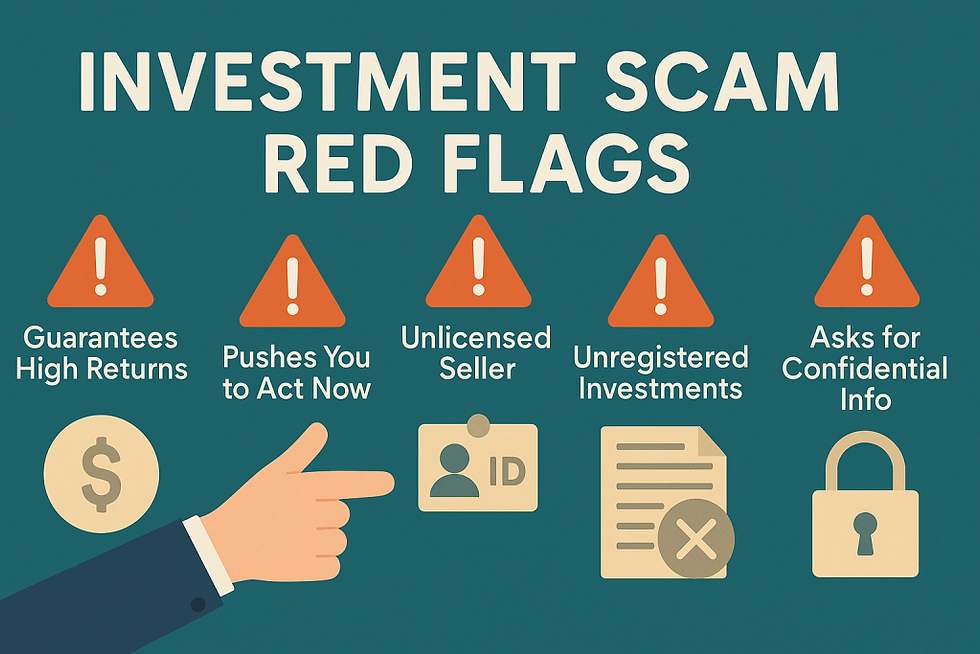
Greed & Urgency: “Act now, this deal closes in hours!” or “Guaranteed 15% returns monthly.”
Scarcity: “This is an exclusive opportunity, invite only.”
Social Proof: “Our clients are making millions, read these testimonials!”
Scam Fact:Even professional investors have fallen for well-run Ponzi and pump-and-dump schemes. The more “confidential” or “urgent” the pitch, the more cautious you should be.
3. The Most Common Investment Scams in 2025
a. Ponzi Schemes (Old but Deadly)
A fraudster pays earlier investors with new investors’ money, rather than actual returns. Eventually, the pyramid collapses when new money runs out.
Red flags:
Consistent, high “guaranteed” returns
Vague investment strategies (“proprietary,” “secret,” “AI-powered”)
Difficulty withdrawing your money or constant excuses
b. Pump-and-Dump Stock Scams
Fraudsters promote a low-priced, thinly traded stock via social media, chat rooms, or emails. When enough investors pile in, they dump their shares at inflated prices, causing the price to crash.
Warning signs:
Aggressive promotion of obscure stocks with no real news
Sudden spikes in price and volume
Promotions on Telegram, WhatsApp, or viral TikTok/YouTube “tips”
c. Advance Fee & Recovery Scams
Scammers promise special deals (pre-IPO shares, government grants, crypto “airdrops”), but require you to pay a “processing fee,” “tax,” or “legal cost” up front. Once paid, your money is gone. Worse: Victims may later be targeted by a “recovery” scam offering to help get their lost funds back, for another fee.
d. Fake Platforms & Apps
Imposter trading sites or apps mimic real brokers or crypto exchanges. You “invest,” but your money is never actually traded, and withdrawals are blocked or ignored.
Check:
Is the broker regulated?
Are there genuine reviews and a real office address?
Is the website URL correct (no extra letters or typos)?
e. Social Media Impersonation & Romance Scams
Scammers create fake profiles of real financial experts or even fake relationships, building trust over weeks or months before introducing a “life-changing” investment.
Clues:
Requests for secrecy
Unsolicited private messages offering investing “help”
Stories of others getting rich quickly
f. Boiler Room Cold Calls & High-Pressure Selling
You get a call or email with an amazing, time-limited offer—often from someone claiming to be a broker or analyst.
Red flags:
Reluctance to provide written material
Evasion when asked for credentials
Pressure to wire funds or send crypto ASAP
4. Real-World Victims: How Scams Ruin Lives
Story #1:
A school principal is contacted by a “senior advisor” from a well-known bank. The advisor offers access to a “VIP fund” guaranteeing 12% annual returns. The principal invests her retirement savings. By the time she realizes the website and calls were fake, her money is gone, and so is the scammer.
Story #2:
A 28-year-old man sees a viral tweet about a “revolutionary” penny stock. He invests $5,000, only to watch the stock tank after a week. He learns the promoters were selling their shares while hyping the stock on social media.
Story #3:
A retired couple in Australia is targeted by WhatsApp messages promising risk-free government bonds. They’re sent to a slick-looking site, invest, and never see their funds again.
5. 10-Point Scam-Spotting Checklist: How to Protect Yourself
If you answer “yes” to any of these, STOP and investigate:
Is someone promising high, guaranteed returns with “no risk”?
Are you pressured to act quickly or keep things secret?
Is the seller unlicensed, unregistered, or unwilling to provide official documents?
Are details about how the investment works vague or confusing?
Is there a request for upfront fees, personal banking info, or crypto transfers before investing?
Is most communication via chat apps, DMs, or private emails?
Are you unable to verify the company’s address, license, or real employees?
Did the offer come out of the blue, an email, social message, or cold call?
Are there amazing testimonials but little real information?
Are there delays or excuses when you try to withdraw funds?
Protect yourself by making this checklist your default before every new investment.
6. What To Do If You’re Targeted (Or Scammed)
Don’t send more money, even if promised a “refund.”
Report immediately: Contact your bank, police, and local financial regulator.
Change passwords and monitor your credit.
Warn others: Share your story to protect your network and help authorities track scammers.
Gather evidence: Save emails, phone numbers, transaction details, and any communication.
7. Actionable Strategies to Protect Yourself and Outsmart Scammers
You now know how scams work and how to spot the red flags, but what concrete steps can you take to ensure you, your family, and your money are never at risk? The best investors combine vigilance with proactive routines. Here’s a proven playbook for staying safe in today’s digital world:
a. Slow Down, Don’t Let Anyone Rush Your Decision
Scammers want you to act before you think. If you ever feel pressure to “get in before it’s too late,” pause. No legitimate investment disappears in hours. Rule: Take at least 24 hours to review any opportunity, no matter how urgent it sounds.
b. Double-Check Licenses and Registrations
In Australia, verify financial services providers through ASIC’s Connect register. In the U.S., use the SEC’s Investment Adviser Public Disclosure website or FINRA’s BrokerCheck. If the person or company is not on these lists, it’s a dealbreaker; walk away.
c. Do Your Research, Every Time
Google the company name plus words like “scam,” “complaint,” or “review.”
Search regulator scam alerts: Both ASIC and the SEC maintain up-to-date lists of known scams.
Check the website: Look for a physical address, Australian Company Number (ACN), or U.S. SEC file number.
Contact directly: Never use contact details provided in a suspicious email or call. Look up the real company’s website and reach out using the published phone/email.
d. Beware of Social Media “Influencers”
Anyone can rent a luxury car and create fake trading profits with Photoshop. Never invest based on a DM, TikTok, WhatsApp, or Telegram message, no matter how convincing or popular the promoter appears.
e. Say No to Upfront Fees
If you’re asked to pay a fee to “unlock” your investment, process a payment, or “verify” your account, that’s almost always a scam. Legitimate investment firms deduct fees from your returns, not upfront.
f. Never Share Sensitive Information Over Unsecured Channels
Scammers may ask for your driver’s license, passport, bank login, or tax file number. Never email or text these documents unless you initiated contact and confirmed legitimacy.
8. How to Protect Vulnerable Friends and Family
Scammers target everyone, but especially retirees, new investors, immigrants, and those who are socially isolated. If you want to shield loved ones from fraud:
a. Start the Conversation Early
Share news stories and official scam warnings.
Explain the basic red flags and urge them to ask you before sending money.
b. Offer to Double-Check Offers Together
Encourage open discussion, remove the stigma around being “fooled.”
Set a rule: no investments without running it by a trusted friend or advisor.
c. Get Familiar With “Recovery” Scams
Scammers may contact previous victims, offering to recover their money for a fee. Warn your family, once scammed, never trust cold offers of help.
d. Monitor Online Activity (if appropriate)
For elderly parents or teens new to investing, consider monitoring emails or online accounts for unsolicited investment pitches.
9. The Biggest Mistakes Investors Make With Scams
a. Thinking “It Can’t Happen to Me”
Complacency is a scammer’s best friend. Stay humble and always assume that any pitch, no matter how professional, could be a con.
b. Falling for Authority Bias
A logo, business card, or professional website means nothing. Scammers can fake credentials and even set up convincing Zoom calls. Always verify with official sources.
c. Ignoring Gut Instinct
If something feels off, trust your gut. Excuses, delays, or odd payment requests are usually warning signs.
d. Trying to “Win Back” Losses
Once you’ve lost money, you’re especially vulnerable to new scams promising recovery. Walk away, never chase losses with more risk.
10. Frequently Asked Questions, Deeper Dive
Q: Is crypto especially risky for scams? A: Yes. Because crypto transactions are irreversible and harder to trace, scammers love the space. Only use regulated, well-known exchanges and avoid unsolicited crypto “investment” pitches.
Q: What about “guaranteed” stock picks from newsletters or social media? A: No legitimate investment comes with guarantees. Newsletters offering secret “triple your money” stocks are almost always pump-and-dump operations or sales tools for worthless securities.
Q: If I send money and then realize it’s a scam, can I get it back? A: Maybe—if you act within hours, your bank might be able to freeze the transfer. But the longer you wait, the lower your chances. Always report the fraud to your bank and authorities immediately.
Q: Are only small, unknown platforms risky? A: No. Scammers have impersonated big banks, brokerages, and government agencies. Always check URLs, call the official number, and use only the real app or site from the App Store/Google Play.
11. How Regulators and Banks Fight Back (But Why It’s Still Up to You)
Regulators now use AI to detect suspicious trading and mass spam.
Banks monitor unusual transactions and may block suspected scams.
But new scams appear every day; your best defense is education and skepticism.
If you report a scam quickly, authorities may be able to warn others and sometimes recover funds. But prevention beats cure every time.
12. Where to Learn More: Resources & Internal Links
Ready to become truly scam-proof and build lifelong investing skills? Find out why thousands trust StockEducation.com:
Clear, real-world lessons on avoiding scams, understanding risk, and building wealth safely.
Ongoing updates to keep you ahead of the latest frauds and scam tactics.
Trusted education, no hype, no shortcuts, just proven strategies and practical checklists.
Don’t leave your financial future to chance. Start at StockEducation.com, your best defense against scams and your most reliable path to confident investing.
13. Conclusion: Make Yourself (and Your Family) Scam-Proof
Investment scams will always exist. But with a skeptical mindset, strong habits, and the right education, you can avoid every fraud, no matter how convincing. Protect your money, your loved ones, and your peace of mind: Question everything, double-check everyone, and never stop learning.
Comments