Investing for Kids: Teaching Children About Stocks and Finance
Introduction: Why Teach Kids About Investing?
Imagine if you had learned about investing as a child. How different would your relationship with money and risk be today?
That’s why more parents, guardians, and educators are starting to introduce investing to kids at a young age. Early financial literacy builds strong money habits, sparks curiosity, and lays the foundation for lifelong wealth-building and independent thinking.
This comprehensive guide walks you step-by-step through the most effective ways to teach children and teenagers about investing, using practical examples, simple language, modern technology, and even gifts that grow over time.
1. Why Start Financial Education Young?
Children are like sponges; what they learn early tends to stick with them for life. Financial habits, attitudes toward risk, and even comfort with the stock market often begin to form in primary school.
What do the studies show?
By age 7, most children have developed their basic money habits (University of Cambridge).
Teens who learn about investing early are more likely to save, invest, and avoid debt as adults.
Early exposure builds confidence and removes the “mystery” around stocks and finance.
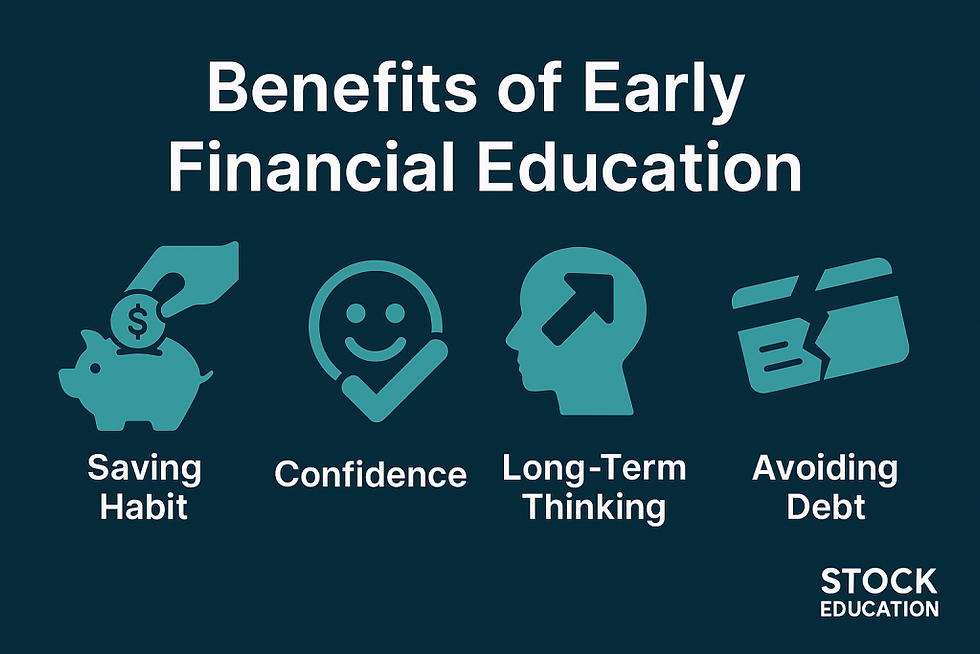
Benefits of early financial education:
Encourages saving over spending
Reduces fear or confusion around money
Creates long-term thinkers and planners
Helps kids avoid bad debt and scams later in life
Increases confidence in handling both small and large sums
If you wait until high school or university, you’re already behind. Start as soon as kids can understand the value of money, even preschoolers can grasp basic concepts!
2. How to Explain Stocks to Children (Ages 5–12)
The trick is to keep it simple, visual, and connected to what kids already know.
a. Make It Relatable
Start with brands your child recognizes, Disney, Apple, LEGO, Nike, McDonald’s. Explain: “Disney is a company, and you can own a tiny piece of Disney by buying a stock.”
“When you own a stock, you own a piece of a company. If the company does well, your piece can become more valuable, and sometimes, they even share some profits with you!”
b. Use Analogies and Stories
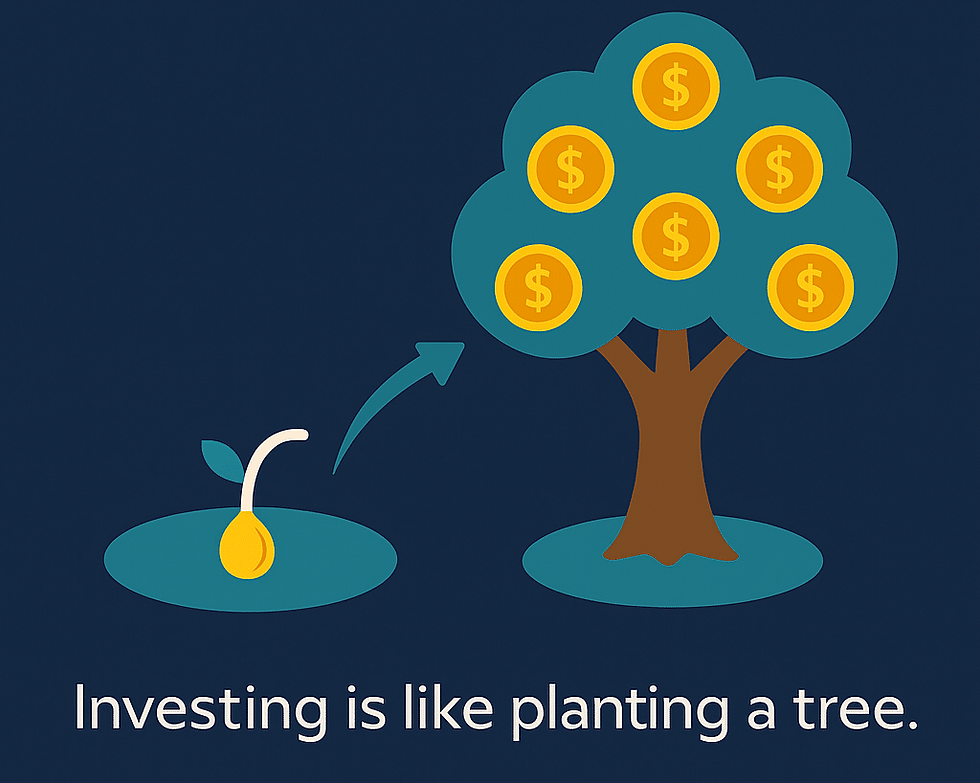
Investing is a lot like planting a tree. You put a small seed (your money) in the ground and, with care and patience, it grows into something big that provides fruit year after year. This “seed to tree” story works wonders with younger kids.
c. Visual Learning and Activities
Draw a company as a pizza or pie chart. Each slice is a share!
Use toy money or real coins to represent shares, dividends, and investment growth.
Play store: Set up a “company” at home, with kids “investing” play money for a share in the profits.
d. Simple Math and Growth Charts
Show how $10 invested grows if the company does well, and how it can shrink if the company struggles. Use easy charts or an app to track their “pretend” investments and watch them grow or shrink over weeks and months.
e. Hands-On Stock Tracking
Pick 2–3 real companies your child knows. Track their stock prices weekly on a chart (paper or digital). Celebrate gains, and talk calmly about losses; this builds healthy emotional habits.
f. Everyday Teaching Moments
When shopping: “We’re buying groceries at Woolworths. Did you know people can own part of Woolworths through stocks?”
At the movies: “Pixar is owned by Disney. When Disney does well, so do its shareholders.”
3. Teaching Teenagers About Investing (Ages 13–18)
Teens can handle more complexity and are ready to move beyond the basics.
a. Open a Custodial Brokerage Account
A custodial brokerage account allows parents to invest in their children.
The account is in the child’s name, but an adult controls it until the child comes of age.
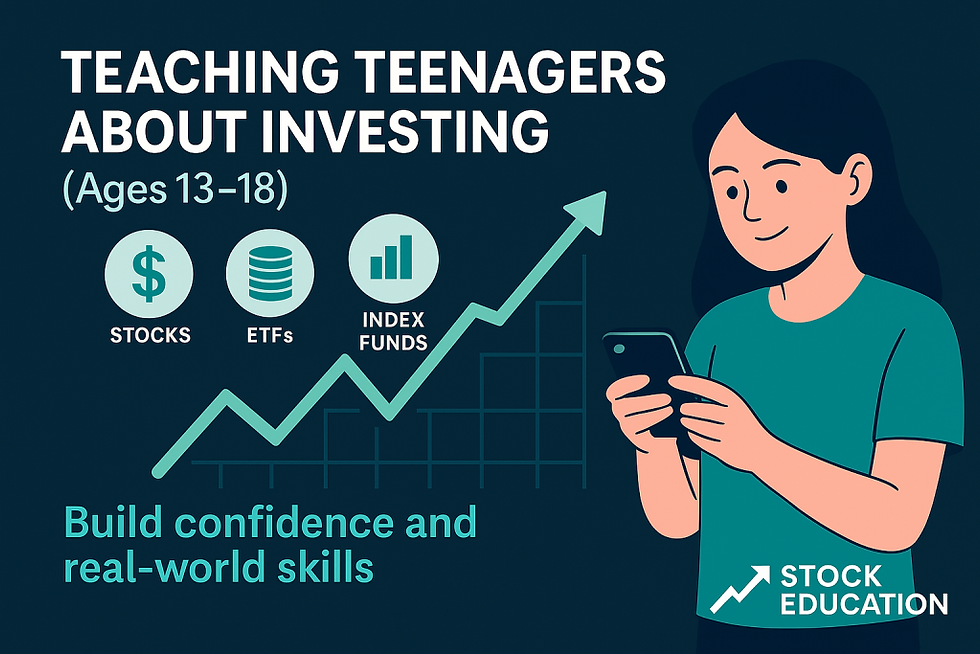
Teens can choose stocks, ETFs, or even index funds, learning how real money grows.
b. Research and Track Real Companies
Encourage teens to pick a few stocks, research them (What does this company do? Why might it grow or shrink?), and follow news affecting their companies. Let them track their holdings, analyze gains and losses, and write short reflections.
c. Use Investment Simulators and Fractional Shares
Simulators like MarketWatch’s virtual stock market let teens practice with “fake” money.
Fractional shares allow investing with as little as $1, removing barriers for small accounts.
d. Teach Core Investment Principles
Compound interest: Show how reinvesting returns makes money grow faster.
Risk vs. reward: More reward usually means more risk; find the right balance.
Diversification: Don’t put all your eggs in one basket. Spread investments across different companies and sectors.
e. Use Teen-Focused Apps
Apps like Greenlight, Stockpile, and Acorns Early are built for teens, with easy-to-understand interfaces and education modules. Some allow “parent approval” for every trade, so you can guide their learning.
f. Watch Finance YouTube or TikTok Creators
Excellent finance educators are creating short, engaging content aimed at teenagers, just be sure to vet them for quality and accuracy. Encourage critical thinking: “Does this advice make sense for the long term?”
4. Gifting Stocks Instead of Toys
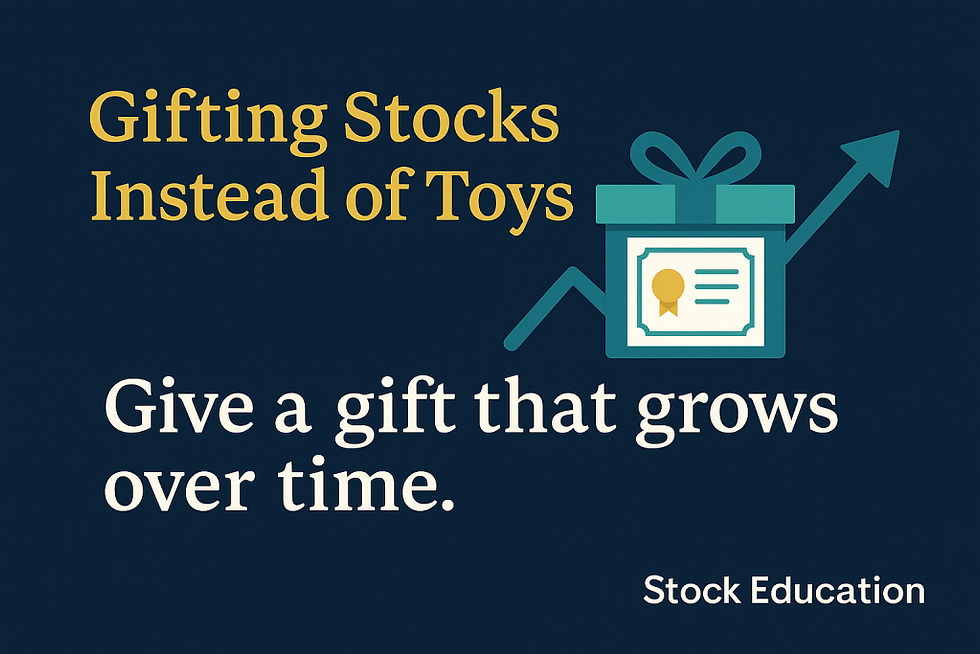
For birthdays, holidays, or special milestones, consider giving a share (or even a fraction of a share) in a company the child cares about.
Why it’s powerful:
The gift can grow in value for years, possibly funding part of their education, travel, or first car.
It sparks questions and conversations about what the company does, how it makes money, and why its value changes.
How to gift stocks:
Use platforms like Stockpile or similar services to buy digital stock “gift cards.”
You can include a printable certificate and a note about why you chose that company.
Make it meaningful: Attach a letter about your investing journey or why you picked this stock. Encourage kids to “check-in” on their gift every birthday.
5. Teaching by Example
Kids and teens learn most by watching adults. If you talk about your investing, explain your decisions (good and bad!), and show excitement about long-term growth, they’ll absorb those attitudes.
Let your child “sit in” while you review your portfolio or read investment news.
Share stories of famous investors, like Warren Buffett, who bought his first stock at age 11!
Be honest about mistakes: “I invested in a company that didn’t work out, and here’s what I learned.”

6. Making Investing Fun: Gamification, Family Challenges & Real Rewards
Kids (and many teens) learn best when lessons are engaging and interactive. Turn investing into a fun, ongoing family project!
a. Family Stock-Picking Challenge
Each family member picks a company (real or pretend) and tracks its progress for a set period (e.g., 3–6 months).
Have a small prize for the best-performing pick (like a family movie night, extra allowance, or the honor of choosing dinner).
Use a whiteboard or shared spreadsheet to track each “portfolio.”
b. Simulate Investing with Apps and Games
Try board games like Monopoly or The Game of Life to practice buying, selling, and long-term planning.
Use free online tools like The Stock Market Game or Investopedia’s stock simulator to let kids experience ups and downs in a safe environment.
Some investing apps (like BusyKid or Greenlight) use badges, points, and mini-games to teach key concepts.
c. Incorporate Storytelling
Create stories about “Alex the Investor” who saves part of every allowance, buys stocks, and learns patience. Have your child add to the story each week based on their “portfolio” performance.
d. Celebrate Learning Milestones
Give “awards” for things like the best explanation of dividends, the most improved saver, or the most creative investing idea.
Frame their first stock certificate, or keep a scrapbook of their investment journey.
7. Building Habits That Last a Lifetime
Learning about investing is more than a one-off lesson; it’s about instilling habits that will benefit your child for decades. Here’s how to make it stick:
a. Set Regular Money Meetings
Once a month, review your child’s savings, investments, and spending with them.
Talk through any questions and celebrate positive progress.
Make it a no-pressure, judgment-free time to build comfort with discussing money.
b. Encourage Automatic Saving & Investing
Teach kids to “pay themselves first.” If they get an allowance, have a set portion automatically go to savings or investing.
Use jars or envelopes to separate money for spending, saving, and investing for very young kids.
Older children and teens can automate contributions into their custodial investment accounts.
c. Reflect on Wins and Losses
Review both gains and mistakes openly. Help your child understand that ups and downs are normal.
Encourage journaling about why they made each investment and what they learned, especially after losses.
d. Reinvest Dividends
If your child’s stock pays dividends, explain how reinvesting these earnings helps their money grow even faster. Show real examples over time.
8. Teaching Kids About Market Bubbles, Scams, and Smart Risk
A crucial part of financial education is preparing your child for the realities and risks of investing, not just the potential rewards.
a. Spotting Market Bubbles
Use the “tulip mania” story, the dot-com bubble, or even recent events like GameStop to illustrate how prices can become disconnected from reality.
Teach the signs: “If everyone says a stock can only go up, that’s a red flag. No investment is risk-free.”
b. How to Avoid Investment Scams
Practice skepticism: “If it sounds too good to be true, it probably is.”
Discuss real examples of scams (like Ponzi schemes or pump-and-dump penny stocks).
Teach them to check sources and avoid “hot tips” from social media or strangers.
c. The Power of Due Diligence
Encourage your child to always research companies, understand what they do, and read a few news articles before “investing” (even in a simulator).
Practice asking questions: “What does this company make? Who are its customers? Why might it grow—or shrink?”
d. Emphasize Long-Term Thinking
Explain how some people try to get rich quickly, but most true wealth is built slowly and steadily.
Share stories of long-term investors who achieved financial independence by staying patient and calm.
9. Books, Resources, and More Ways to Keep Learning
Learning about investing should never stop! There’s a world of excellent books, games, and free resources for kids and teens.
a. Best Books for Kids and Teens
The Everything Kids’ Money Book by Brette Sember (ages 7–12)
How to Turn $100 into $1,000,000 by James McKenna (tweens/teens)
Money Ninja by Mary Nhin (young children)
Rich Dad Poor Dad for Teens by Robert Kiyosaki
b. Engaging Games
Monopoly: Practice asset ownership, risk, and reward.
Cashflow for Kids: Teaches basic investing, cash flow, and asset building.
The Stock Market Game: Used in schools worldwide, simulates real market conditions.
c. Online Tools and Apps
Stockpile: Great for gifting stocks and simple investing.
Greenlight: Combines debit cards, chores, and investing for kids and teens.
BusyKid: Teaches earning, saving, donating, and investing, plus pay “interest” for savings.
Investopedia Stock Simulator: A Safe place for older kids and teens to experiment with strategies.
d. Parental Guides and Free Courses
Many banks and government agencies offer free online financial literacy courses designed for kids.
StockEducation.com (internal link) offers step-by-step guides, AI-powered lessons, and interactive calculators tailored for all ages, helping both parents and kids learn together.
10. Frequently Asked Questions (FAQs) About Teaching Kids to Invest
Q: At what age should you start teaching kids about investing? A: Start as soon as they can count coins or understand the basics of spending and saving, often around age 4–5. Concepts can be adjusted for age and maturity.
Q: How much money should a child invest? A: The dollar amount isn’t important. Focus on habits, investing a few dollars regularly is more powerful for learning than one big gift.
Q: Should kids only invest in companies they know? A: For beginners, yes. It’s easier and more fun. As they grow, encourage research into different industries and broader funds.
Q: What’s the best way to keep them interested? A: Make it personal, fun, and interactive, track progress, offer small rewards, and share stories of real-life investors.
11. Measuring Progress: How Do You Know Your Child Is Learning?
They ask thoughtful questions about money, companies, or the news.
They show excitement when stocks go up, but don’t panic when they go down.
They start saving, setting goals, and thinking about the future.
They talk about what they’ve learned with friends or family.
12. Final Thoughts: Investing as a Lifelong Advantage
When you teach your child about investing, you’re giving them a skill set that can change their future. It’s not about turning them into a Wall Street whiz; it’s about giving them the tools to make smart choices, avoid scams, and become confident with their money for life.
Start small. Make it fun. Be patient. Over time, you’ll see their curiosity and skills blossom, setting them up for a future of smart, independent financial decisions.
Comments