Sector Investing: How to Diversify Your Portfolio by Industry
- Felix La Spina
- Jul 2, 2025
- 6 min read
If you’re aiming to build wealth in the stock market, portfolio diversification is one of the most important concepts you’ll ever learn. But did you know that one of the smartest ways to diversify is by investing across different industries, or “sectors”? Sector investing involves strategically spreading your investments among key stock market sectors such as technology, healthcare, financials, energy, consumer goods, and more. This approach helps reduce risk and capture growth opportunities regardless of how the overall market is performing. Sector investing can boost your returns, protect your capital from sector-specific downturns, and help you stay ahead in both bull and bear markets.
In this in-depth beginner’s guide, you’ll discover why sector diversification is essential for long-term investing success and how to use it to create a resilient, balanced investment portfolio. We’ll break down the major stock market sectors, explore how different industries respond to economic cycles, and show you how to allocate your investments to align with your risk tolerance and financial goals. You’ll also learn about sector-specific risks such as volatility in tech stocks or regulatory changes in healthcare, and how to spot new trends and leading sectors before the crowd. Plus, we’ll explain the benefits of using sector ETFs for instant diversification and how to combine sector investing with other proven diversification strategies.
Whether you’re searching for the best-performing stock market sectors historically, considering how to invest in technology or healthcare stocks, or want to understand the role of sector ETFs in a modern portfolio, this guide is your all-in-one resource. You’ll get practical, actionable tips for sector allocation, real-world examples, and expert insights designed for both beginners and experienced investors. Written to be SEO-friendly and optimized for Google search, this guide will empower you to build a smarter, more robust investment portfolio, one that’s ready for any market condition and focused on long-term growth and stability.
What Is Sector Investing?
Sector investing is the practice of spreading your investments across various industries within the economy. Rather than betting everything on one type of company (like all tech stocks), you invest in multiple sectors, such as technology, healthcare, energy, consumer staples, financials, and more. This reduces risk and increases the potential for steady, long-term returns.
Smart portfolio diversification strategies nearly always recommend sector diversification as a key element of reducing risk. By holding companies from different sectors, you protect your portfolio from the ups and downs of any single industry.
The 11 Major Stock Market Sectors Explained
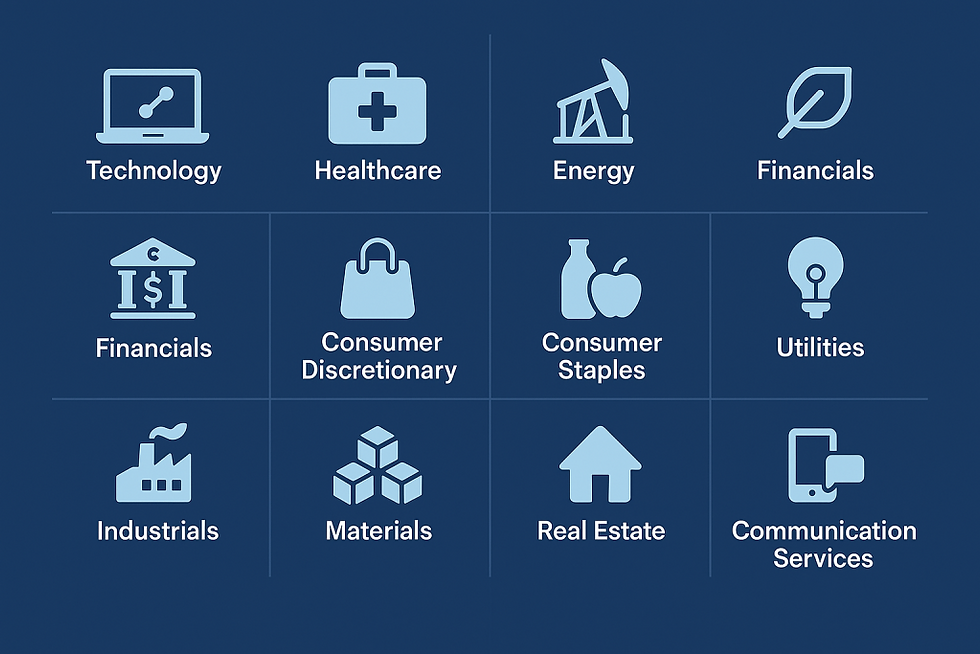
The stock market is typically divided into 11 sectors, each representing a different slice of the economy:
Technology: Software, hardware, and digital services (e.g., Apple, Microsoft, Google).
Why invest? High growth potential; key driver of modern innovation.
Keyword: How to invest in the technology sector
Healthcare: Pharmaceuticals, medical devices, healthcare providers (e.g., Johnson & Johnson, Pfizer).
Why invest? Aging populations, constant demand, and recession-resistant.
Keyword: reasons to consider healthcare stocks
Financials: Banks, insurance, investment companies (e.g., JPMorgan Chase, Visa).
Why invest? Benefit from economic growth and rising interest rates.
Consumer Discretionary: Retail, travel, luxury goods (e.g., Amazon, Nike, Starbucks).
Why invest? Grows with consumer confidence and spending cycles.
Consumer Staples: Food, beverages, household goods (e.g., Procter & Gamble, Coca-Cola).
Why invest? Defensively, people buy essentials in any economy.
Energy: Oil, gas, renewables (e.g., ExxonMobil, Chevron).
Why invest? Essential to the global economy; cyclical but can pay high dividends.
Keyword: impact of oil prices on energy stocks
Industrials: Manufacturing, transportation, aerospace (e.g., Boeing, Caterpillar).
Why invest? Sensitive to economic cycles and infrastructure spending.
Materials: Mining, chemicals, construction (e.g., DuPont, Newmont).
Why invest? Tied to economic growth, commodity prices.
Utilities: Electric, gas, water providers (e.g., Duke Energy).
Why invest? Steady cash flow; classic defensive sector.
Real Estate: REITs, property developers, management companies (e.g., Simon Property Group).
Why invest? Income potential often pays dividends.
Communication Services: Telecom, media, internet (e.g., AT&T, Meta/Facebook).
Why invest? A mix of growth and income; key to modern infrastructure.

Why Sector Diversification Matters
The performance of sectors changes over time. For example, technology might boom for a few years, then lag while energy or healthcare outperforms. Smart portfolio diversification strategies ensure that you’re never overexposed to one sector, minimizing the impact of sector-specific downturns.
Historical Performance
Looking at best-performing stock market sectors historically, technology and healthcare have often led the way over long timeframes, but energy and financials can outperform in different economic conditions. Table: Sample of Sector Returns (Past 20 Years)
(*Estimates. Past performance doesn’t guarantee future results.)
Cyclical vs. Defensive Sectors: What’s the Difference?
Cyclical Sectors (e.g., technology, consumer discretionary, industrials, energy):These sectors do well when the economy is growing and people are spending money. They’re more volatile and sensitive to economic changes.
Keyword: evaluating cyclical vs defensive sectors
Defensive Sectors (e.g., healthcare, consumer staples, utilities):These sectors hold up better during recessions because people always need healthcare, food, and electricity.

Pro Tip: A balanced portfolio should have exposure to both cyclical and defensive sectors to weather any market environment.
Sector-Specific Risks
Each sector has unique risks you need to be aware of:
Technology: Rapid innovation, obsolescence, and regulatory changes.
Healthcare: Policy changes, patent expirations, litigation.
Energy: Oil price swings, geopolitical risk, environmental regulation.
Financials: Credit risk, economic cycles, interest rates.
Consumer Discretionary: Shifts in consumer preferences, economic downturns.
Keyword: sector-specific risks
Diversification by sector helps you manage these risks, rather than being blindsided by a downturn in one industry.
How to Allocate Investments by Industry (Portfolio Allocation Breakdown)
A classic portfolio allocation by industry breakdown for a balanced investor might look like this:
Technology: 20%
Healthcare: 15%
Financials: 15%
Consumer Discretionary: 10%
Consumer Staples: 10%
Energy: 10%
Industrials: 8%
Materials: 5%
Utilities: 4%
Real Estate: 3%
Adjust these weights based on your goals, risk tolerance, and market outlook.
Sector ETFs vs. Individual Sector Stocks
Should you buy individual stocks or use sector ETFs? Here’s what you need to know:
Sector ETFs
Track an entire sector (e.g., Technology Select Sector SPDR ETF: XLK).
Offer instant diversification within a sector.
Lower risk than picking single stocks.
Lower fees compared to active funds.
Keyword: sector ETFs vs individual sector stocks
Individual Sector Stocks
Higher potential reward if you pick a winner.
Higher risk and volatility.
Requires deep research and monitoring.
For most beginners, sector ETFs are a simple, powerful way to diversify by industry without stock-picking stress.
How Sector Rotation Works (And How to Time It)
Sector rotation means shifting your investments toward sectors expected to outperform in the current phase of the economic cycle.
Early Recovery: Cyclical sectors (technology, consumer discretionary, financials) tend to lead.
Late Cycle: Energy, materials, and industrials often outperform.
Recession: Defensive sectors (healthcare, consumer staples, utilities) usually hold up best.
Keyword: timing sector rotation for higher returns
While professional investors sometimes “rotate” aggressively, for most people it’s best to maintain broad, balanced exposure and avoid excessive trading.
The Impact of Oil Prices on Energy Stocks
Oil prices are a major driver of energy sector performance. When oil prices rise, energy company profits often surge, leading to strong stock performance. Conversely, falling oil prices can hurt profits and share prices.
Keyword: impact of oil prices on energy stocks
If you invest in energy stocks or ETFs, watch oil price trends, geopolitical news, and OPEC decisions closely.
How to Identify Emerging Growth Sectors Early
Spotting new trends can be a major wealth builder. For example, technology was a “growth sector” in the 1990s, while clean energy and artificial intelligence are seen as emerging growth sectors today.
Tips to identify growth sectors early:
Follow business news and reports from consulting firms (like McKinsey, Deloitte).
Watch for government incentives or regulatory changes.
Monitor IPO activity in new industries.
Look for shifts in consumer behavior or new tech adoption.
Use ETF screeners for thematic funds (AI, clean energy, robotics, biotech).
Keyword: identifying emerging growth sectors early
How to Invest in Sectors: A Practical Step-by-Step Guide
Set Your Diversification Goals Decide if you want to mimic the market (S&P 500 weightings) or tilt toward your favorite sectors.
Choose Sectors and Allocation Pick several sectors that fit your risk profile and market outlook.
Select Sector ETFs or Individual Stocks For instant diversification, buy a sector ETF. For higher risk/reward, choose individual stocks in sectors you believe in.
Rebalance Regularly Check your sector allocations at least once a year. Rebalance if you’re overweight or underweight due to market moves.
Stay Informed Keep up with industry news and trends affecting your chosen sectors.
Want more step-by-step guides?Visit StockEducation.com for more investing strategies, stock lists, and beginner resources!
Frequently Asked Questions About Sector Investing
Q: How many sectors should I invest in for proper diversification? A: Most experts recommend exposure to at least 5–7 sectors. Full diversification includes all 11 major sectors.
Q: Can I overweight sectors I believe will grow faster? A: Yes, but be aware of increased risk. It’s fine to tilt your portfolio, but always maintain some balance.
Q: Are sector ETFs better than mutual funds? A: Sector ETFs are usually lower cost, more liquid, and more tax-efficient than mutual funds.
Q: How often should I rebalance my sector allocations? A: Review at least annually or after major market events.
Q: What’s the safest sector to invest in? A: No investment is risk-free, but defensive sectors (healthcare, consumer staples, utilities) tend to be more stable.
Conclusion: Smarter Diversification Through Sector Investing
Sector investing is one of the smartest, simplest ways to diversify your portfolio, reduce risk, and capture growth opportunities across the economy. By spreading your investments across different industries, using sector ETFs or carefully selected stocks, and keeping an eye on sector rotation, you’ll position yourself for more consistent long-term returns while sleeping easier at night. Ready to build a truly diversified, future-proof portfolio? Visit StockEducation.com for detailed sector investing guides, top ETF lists, and expert tips tailored for beginners.
Comments