The Psychology of Investing: Overcoming Fear, Greed & Emotional Biases
- Felix La Spina
- Jul 9, 2025
- 6 min read
Investing isn’t just about crunching numbers, creating strategies, or picking the next hot stock. The real battleground for successful wealth-building is inside your mind. Understanding the psychology of investing is the secret weapon that separates truly successful investors from those who fall victim to costly mistakes. Even the most experienced professionals have lost fortunes not because of a bad investment, but because they failed to master their emotions—particularly fear, greed, and other powerful psychological biases.
Emotional investing is a major risk for beginners and seasoned investors alike. When the market is soaring, greed can lure you into overvalued stocks and reckless bets. During market downturns, fear can trigger panic selling, locking in losses. Most investor mistakes happen not because of a lack of knowledge, but because of unmanaged emotions and psychological traps. By understanding behavioral finance and common investor biases, you can learn to manage your mindset, make rational decisions, and protect your portfolio from self-sabotage.
This beginner-friendly, in-depth guide explains why the psychology of investing matters, the most common emotional investing traps and investor biases (and how to overcome them), and practical tools to build an unbreakable investing mindset. Master your emotions, and you’ll master the markets—building consistent, long-term wealth with confidence and clarity.
Why Investing Psychology Matters
You can learn every investing rule and back-test every strategy, but if you can’t manage your emotions, your performance will suffer. Countless studies in behavioral finance and the psychology of investing have shown that most individual investors make the classic mistake of buying high and selling low, not because of a lack of knowledge, but because of emotions. Headlines about market crashes trigger panic selling. Stories of overnight millionaires spark greed and reckless risk-taking. Emotional investing leads to impulsive decisions that can sabotage even the best financial strategies. Building a strong investor mindset and understanding psychological biases such as loss aversion, confirmation bias, and herd mentality—are crucial for navigating market ups and downs. Developing emotional discipline empowers you to stick to your investment plan, make rational decisions, and achieve long-term financial goals. Ultimately, the biggest enemy in investing is often yourself, making investing psychology the most important skill every investor must master to succeed in today’s dynamic stock market.

Key Points:
Discipline beats emotion: The world’s best investors follow rules, not gut feelings. Markets are driven by people: Even “rational” markets are made up of millions of humans, each prone to fear, greed, and psychological shortcuts. Self-awareness is your edge: Understanding your biases and triggers helps you avoid expensive mistakes.
Common Investor Biases (And How to Avoid Them)
Understanding your psychological traps is half the battle. Here are the most common investor biases and how to sidestep them:
1. Loss Aversion
Definition: We hate losing money more than we enjoy making it. Losses feel twice as painful as gains feel good.
Symptoms: Holding onto losing stocks too long, selling winners too quickly, or panicking in downturns.
How to avoid:
Set clear rules for when you’ll sell, before emotions kick in.
Remind yourself: temporary losses are part of long-term growth.
Focus on your portfolio’s overall performance, not individual losers.
2. Overconfidence Bias
Definition: Believing you’re smarter or luckier than the market.
Symptoms: Taking oversized risks, ignoring risks, failing to diversify.
How to avoid:
Regularly review past decisions. Where did you get lucky?
Compare your results to a market index.
Stay humble and keep learning (the market humbles everyone eventually).
3. Herd Mentality (Bandwagon Effect)
Definition: Copying the crowd, especially during bubbles or panics.
Symptoms: Buying at the top, selling at the bottom, FOMO-driven trades.
How to avoid:
Set your investment criteria.
Don’t buy just because “everyone else is.”
Question popular narratives: “If everyone agrees, what could go wrong?”
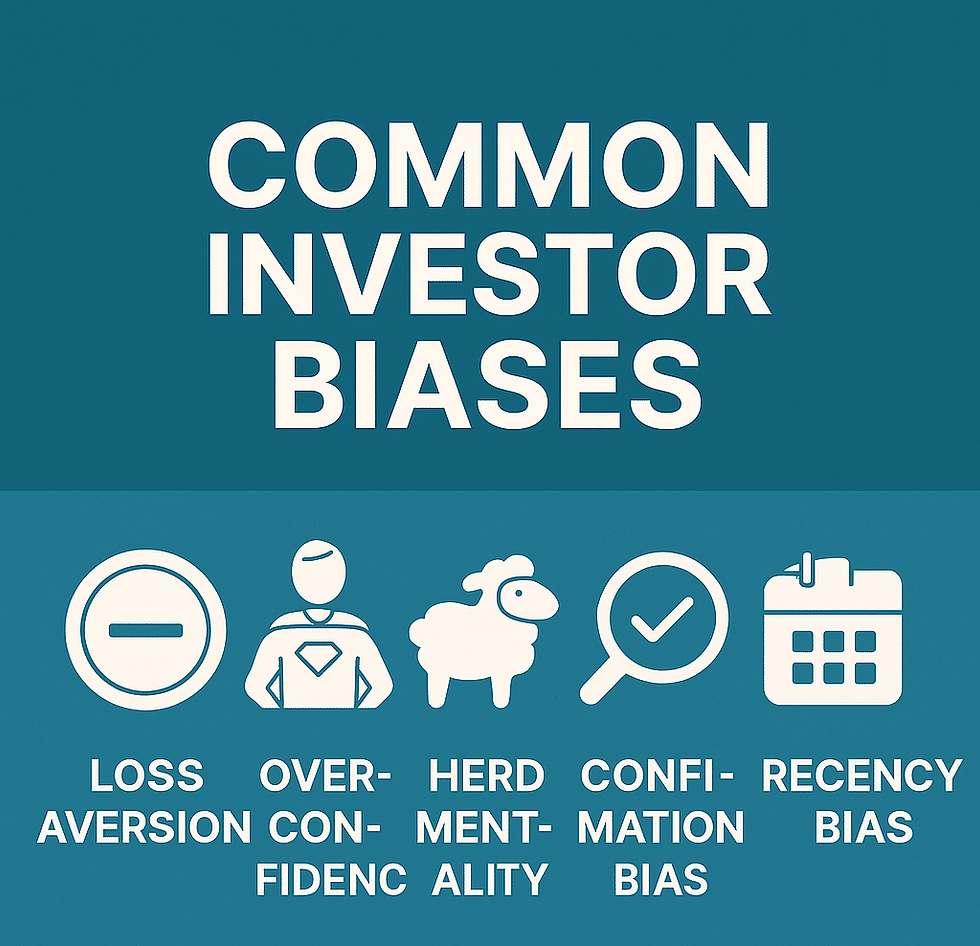
4. Confirmation Bias
Definition: Seeking out information that confirms your views and ignoring evidence to the contrary.
Symptoms: Only reading bullish news about your favorite stocks.
How to avoid:
Actively seek out opposing viewpoints.
Challenge your assumptions before making decisions.
Use checklists to ensure you’re evaluating all the evidence.
5. Recency Bias
Definition: Assuming that recent trends will continue forever.
Symptoms: Chasing hot stocks, panic-selling after a sudden drop.
How to avoid:
Focus on long-term data and trends, not just the latest news.
Build your plan around fundamentals, not headlines.
Pro Tip:
Keep an investing journal. Write down your reasons for each buy/sell decision, your emotions, and the outcome. This helps you spot patterns and improve over time.
Managing Emotions During Stock Market Volatility
Market volatility is when emotions run highest, both fear (crashes) and greed (bubbles). If you’re not careful, you’ll end up selling after a crash (locking in losses) or buying at the peak (risking heavy losses).
Tips for Staying Calm:
Remember your long-term goals. Investing is a marathon, not a sprint.
Tune out the noise. Financial media thrives on drama.
Limit how often you check your portfolio. Once a month is enough for long-term investors.
Automate your investing. Use recurring investments or robo-advisors to remove emotion from the process.
Have a written plan for what you’ll do in market drops, and stick to it!
Example Scenario
If your investment drops 20% in a market downturn, remind yourself:
Does the company still have strong fundamentals?
Has your long-term outlook changed?
If not, avoid panic selling.
The Importance of Discipline in Investment Success
Discipline is what separates successful investors from those who get whipsawed by emotion. Great investors like Warren Buffett, Ray Dalio, and Peter Lynch have all stressed the importance of sticking to a process, even when it’s emotionally uncomfortable.
How to Build Discipline:
Set clear rules for buying, selling, and rebalancing.
Write down your strategy and revisit it regularly.
Automate what you can (e.g., direct debit into an index fund).
Avoid trend-chasing, stick to your plan, especially when others are losing their heads.
Pro Tip:
Building discipline is easier with the right tools. StockEducation.com offers checklists, goal planners, and frameworks to help you stick to your strategy.
Why Fear and Greed Drive Market Bubbles
Every market bubble and crash in history was powered by the same two forces: greed (chasing huge gains) and fear (fleeing losses). Understanding these cycles helps you avoid becoming a victim.
Real-World Examples:
Dotcom Bubble (2000): Greed fueled tech stock mania, fear caused a massive crash.
Global Financial Crisis (2008): Easy money and overconfidence, then fear and panic selling.
COVID-19 Crash and Rally (2020): Sudden fear, then greed and hope, led to a rapid rebound.
Takeaway:
Be wary when “everyone’s getting rich.”
Don’t sell in a panic – wait for your emotions to settle before acting.
Market cycles are natural – what goes up fast can fall just as fast.
Tips to Avoid Panic Selling Stocks
Don’t make decisions based on headlines. Financial news is often designed to provoke fear.
Revisit your investment plan. If your long-term thesis is unchanged, stay the course.
Diversify. Spread your investments across sectors, assets, and geographies.
Automate rebalancing. Let technology keep your portfolio in balance.
Consider stop-losses or strict buy-and-hold rules. Only sell if your original reason for investing is no longer valid.
Mindset Shifts for Long-Term Wealth Building
Long-term investing success requires a fundamental shift in how you view risk, time, and uncertainty.
Key Mindset Shifts:
Embrace volatility. Ups and downs are a normal (even necessary) part of market growth.
See corrections as opportunities. Market drops let you buy great assets at discounted prices.
Focus on process, not just outcome. Judge your decisions by the quality of your process, not whether you “won” a single trade.
Celebrate patience. Compound interest and market growth both reward long-term thinkers.
Developing a Consistent Trading Psychology
Consistency beats brilliance in investing. Emotional decisions are inconsistent; rules-based investing is repeatable.
How to Develop Consistent Psychology:
Set written rules for when to enter and exit investments.
Review your wins and losses regularly, objectively, not emotionally.
Don’t let ego drive your trades. Admit mistakes and adjust.
Detach from short-term results. Focus on the long-term journey.
Mental Tools for Controlling Investment Decisions
Pre-commitment: Decide what you’ll do in advance for different scenarios.
Checklists: Use a pre-trade checklist to reduce emotional mistakes.
Mindfulness: Notice your emotions, but don’t act on them. Take a break before making big decisions.
Limit distractions: Avoid over-checking news, price alerts, and social media.
Successful Investor Habits to Emulate
Keep learning: Read books, take courses, and follow market history.
Stay humble: Nobody beats the market every time.
Diversify: Don’t bet your future on a single stock or sector.
Invest for the long term: Ignore the daily noise.

Surround yourself with calm thinkers: Find mentors, read level-headed analysis, and join disciplined communities.
Beating the Herd Mentality in Stock Markets
Think independently: Don’t buy or sell just because everyone else is.
Question the narrative: When there’s consensus, ask what might be missing.
Don’t fear missing out (FOMO): There are always new opportunities.
Conclusion: Master Your Mindset, Master Your Money
The best investors in the world aren’t just skilled analysts; they’re skilled at managing themselves. By learning to recognize your emotional triggers, avoiding classic psychological traps, and focusing on a disciplined, long-term approach, you’ll be able to build lasting wealth through any market cycle.
Ready to level up your mindset? Explore StockEducation.com for expert lessons, investing frameworks, AI-powered checklists, and supportive communities that help you stay focused, rational, and successful, no matter where you are on your financial journey.
Comments